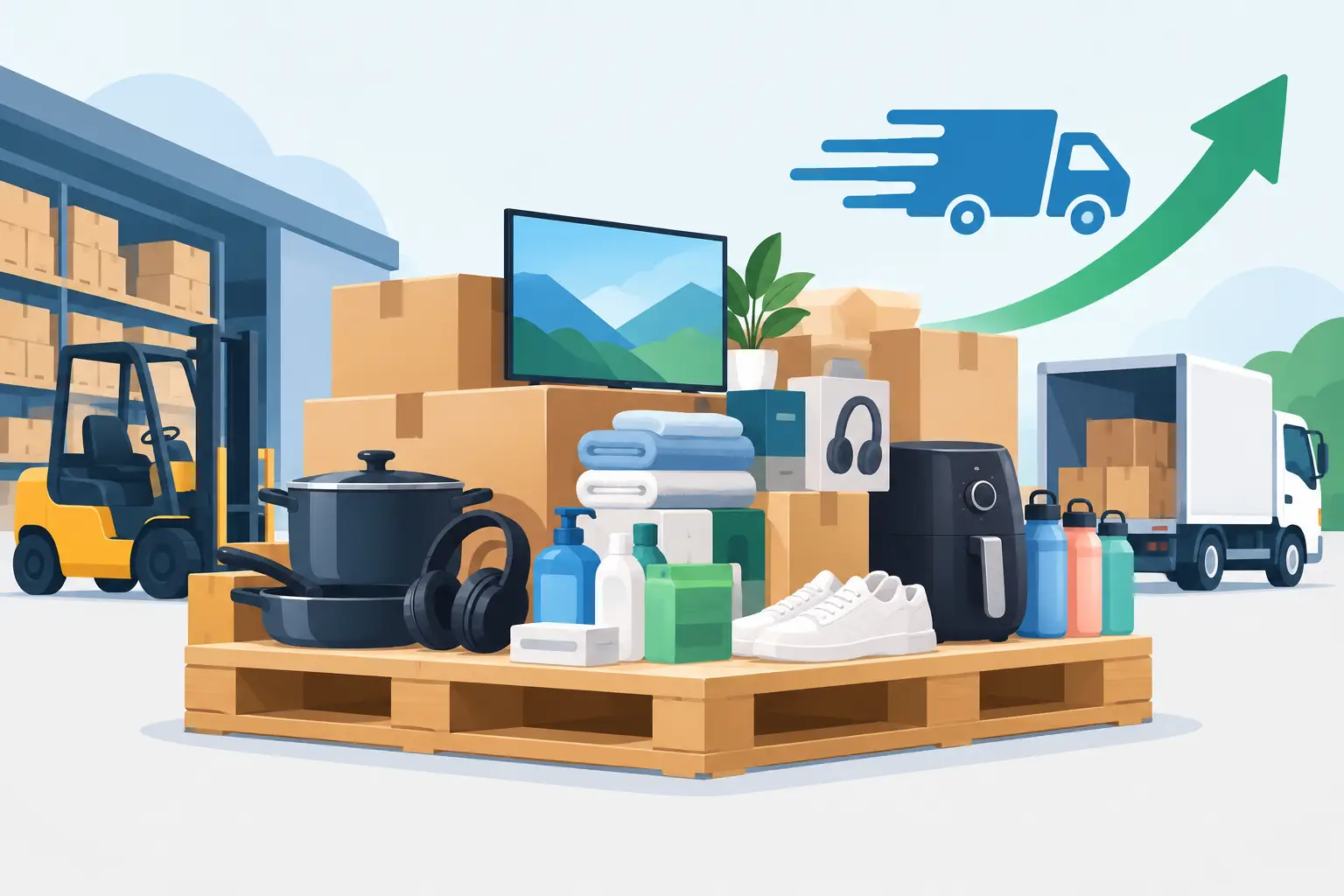
A pallet can look profitable on paper and still tie up your cash for months. The best products for resale pallets are not always the items with the highest suggested retail price. They are the products customers recognize, need, can inspect quickly, and will buy through the selling channels you already use. A €28 item that sells every week is often more valuable than a €276 item that sits in storage waiting for the right buyer.
For most resellers, the smart move is to buy inventory with visible demand, clear condition details, and realistic resale pricing. That means choosing manifested pallets with real photos and item-level information instead of gambling on a vague description and an inflated retail-value number.
What Makes a Pallet Product Easy to Resell?
Fast-moving liquidation inventory usually has four things in common: recognizable brands or product types, practical everyday use, an easy-to-understand condition, and a resale price that leaves room for marketplace fees, labor, storage, and profit.
The right category depends on your business model. A flea-market vendor may do well with low-priced tools, small appliances, and household basics. An online seller may prefer branded footwear, electronics accessories, and collectibles that are easy to ship. A discount-store operator may need a broad mix of home goods and seasonal merchandise to keep shelves full.
Before you buy, ask a simple question: can you name the likely selling channel for most of the items on this pallet? If the answer is unclear, the inventory may be too speculative. A manifest gives you the information needed to make that call before your money is committed.
Best Products for Resale Pallets by Category
Branded Footwear and Apparel
Branded shoes, clothing, handbags, watches, and accessories can produce strong margins because buyers understand their value quickly. Footwear is especially attractive when sizes, brands, and condition are visible. New-with-tags apparel and shelf-pull shoes can move well through online marketplaces, local boutiques, live selling, and pop-up events.
There is a trade-off. Apparel has a high item count but requires sorting, sizing, photographing, and seasonal planning. A winter-jacket pallet purchased in spring may still be profitable, but it may not turn quickly. Look for broadly wearable basics, recognizable labels, and a useful size range rather than relying only on a high retail estimate.
Consumer Electronics and Accessories
Electronics can offer excellent per-item returns, particularly for sealed or tested items such as headphones, smart-home devices, phone accessories, gaming gear, small printers, and computer peripherals. Smaller products are easier to store and ship, which helps online sellers protect their margins.
Condition matters more here than in nearly any other category. Customer-return electronics can be profitable when they are inspected, accurately graded, and priced for their actual state. Untested electronics may fit a repair-focused reseller, but they should never be valued like retail-ready inventory. Check whether chargers, remotes, cables, packaging, and essential parts are included, because missing accessories can materially change resale value.
Tools, Power Equipment, and Auto Parts
Tools and practical equipment have reliable demand because they solve immediate problems. Hand tools, power-tool accessories, outdoor equipment, work lights, pressure washers, and replacement auto parts often sell to buyers who care more about function than perfect packaging.
This category rewards knowledge. A reseller who can identify compatible batteries, model numbers, or vehicle fitment can price inventory more accurately than a general seller. Large power equipment can bring bigger ticket sales, but freight, storage, testing time, and local delivery needs must be included in your buying plan.
Household Goods and Small Appliances
Household pallets are a dependable option for discount stores, local sellers, and new resellers who want inventory with broad appeal. Kitchen tools, bedding, storage products, cleaning items, décor, pet supplies, small appliances, and home-organization products are easy for customers to understand and often sell without a long explanation.
The advantage is consistent demand. The risk is that generic household products can become price-sensitive online. A basic item may be better suited to a local store, flea market, or bundle sale where buyers can see it in person and avoid shipping costs. Inspect for breakage, missing pieces, and opened packaging before assigning a resale price.
Camping, Outdoor, and Seasonal Merchandise
Camping gear, patio products, coolers, sporting goods, holiday décor, and seasonal home items can create fast sales when purchased at the right time. Demand rises sharply when the selling season is close, and customers frequently buy these products locally because they want them immediately.
Timing is the whole game. Buy outdoor inventory before spring and summer demand begins, not after every seller has already stocked up. Holiday merchandise can offer attractive margins, but it needs a clear exit plan. If it does not sell during its peak window, you may need to discount it heavily or hold it until next year.
Books, Media, and Niche Collectibles
Books may not look exciting beside electronics or designer goods, but they can be a practical category for sellers who understand editions, sets, educational subjects, and collectible demand. They are generally easy to grade, easy to ship, and simple to bundle.
Niche products work best when you have a process. Scan, sort, bundle, and move lower-value items in lots rather than spending too much time listing every single piece. The same principle applies to trading cards, hobby items, and specialty accessories. Knowledge creates the margin, but labor can erase it if your workflow is slow.
Condition Is Part of the Product
The product category tells you where demand may be. The grade tells you what you can honestly promise your buyer. This is why a pallet described as inspected, graded, and accurately photographed is worth more than a cheap mystery pallet with no usable detail.
New, overstock, shelf-pull, and new-with-tags inventory typically requires less processing and can be listed faster. Customer returns may have a lower acquisition cost, but they require testing, cleaning, part matching, and realistic descriptions. Salvage inventory can work for repair businesses, parts sellers, or experienced operators, but it is not a shortcut to easy profit.
Do not treat estimated retail value as your expected sales total. Retail value is a reference point, not cash in your register. Build your numbers from likely resale prices, then subtract your pallet cost, freight, marketplace fees, supplies, labor, refunds, and the items that will not sell.
How to Choose a Pallet That Fits Your Selling Channel
A profitable purchase starts with matching inventory to how you sell. Online marketplaces favor compact, shippable products with clear model numbers and enough margin to absorb fees. Local stores and flea markets can move bulky household goods, open-box items, and lower-priced products that are expensive to ship. Social selling performs well with apparel, accessories, décor, and products that benefit from a quick demonstration.
Start narrower than you think. A first-time buyer does not need a giant mixed pallet with ten unrelated categories. A category-focused pallet is easier to receive, sort, price, and measure. Once you know your average selling price, sell-through rate, and return rate for that category, you can expand with more confidence.
At Euro Liquidation Hub, the goal is to give resellers usable buying information before they order: visible inventory, clear grades, real product photos, and manifests that support an actual pricing decision. That transparency is not a bonus. It is how you avoid spending money on inventory you cannot confidently sell.
A Quick Profit Check Before You Order
Use the manifest to identify your likely winners, your steady sellers, and your problem items. Price the better-known products conservatively based on what buyers in your channel will actually pay. Then estimate a lower recovery value for opened, incomplete, unbranded, or uncertain-condition items.
If your projected sales still leave room after every expense, the pallet deserves a closer look. If the deal only works when every item sells at full retail, pass on it. Good liquidation buying is not about hoping for a jackpot. It is about repeating purchases where the numbers make sense before the truck arrives.
Choose products you can inspect, price, and move with the resources you have now. A clear manifest, an honest grade, and a category your customers already buy can turn a pallet from a gamble into inventory that keeps your resale business moving.