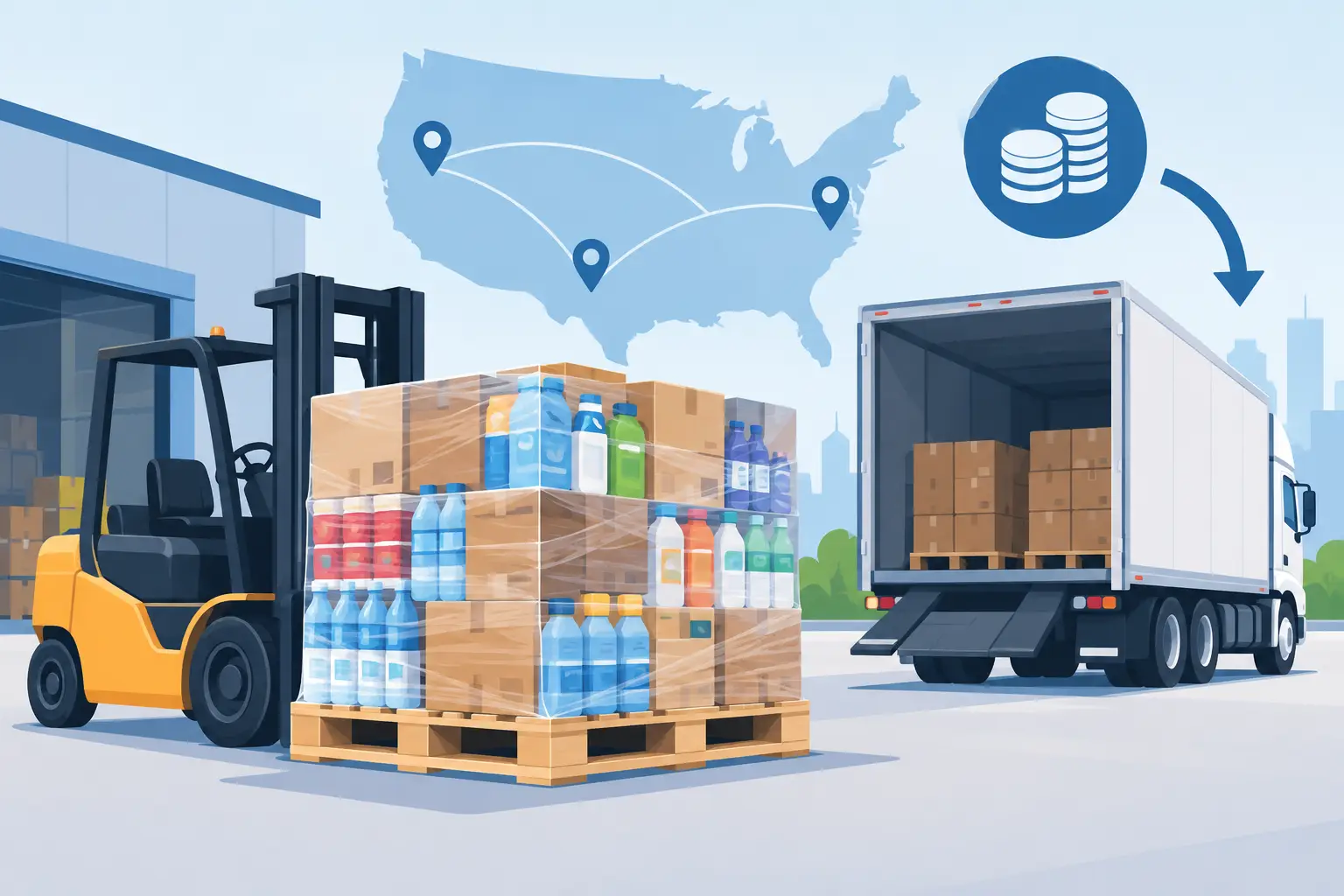
A pallet that looks profitable on paper can lose its edge the moment freight is ignored. The cost to ship liquidation pallets is not a minor checkout detail. It is part of your landed cost, which means it directly affects what you can pay for inventory, how you price it, and whether the pallet still leaves room for real profit.
For a reseller buying manifested overstock, returns, or surplus inventory, the right question is not simply, “What does shipping cost?” Ask: “What will this pallet cost me at my door, ready to sort, list, and sell?” That number gives you a far more honest starting point than an attractive pallet price alone.
What Does It Cost to Ship Liquidation Pallets?
There is no single nationwide freight price for a liquidation pallet. A shipment moving a short distance between commercial locations may cost a few hundred dollars, while a cross-country residential delivery with special service requirements can cost substantially more. Freight rates move with carrier capacity, fuel costs, lane demand, pallet dimensions, shipment weight, and pickup and delivery conditions.
For planning purposes, many single-pallet buyers should expect freight to be a meaningful line item, not a token fee. A nearby commercial delivery may be more affordable than expected, but a heavy mixed-goods pallet sent across several states can quickly add hundreds of dollars. Two pallets do not always cost twice as much as one, either. Consolidating inventory can improve the freight cost per pallet because the carrier is moving more product in one shipment.
The only number that matters is the quote for your specific order and delivery location. Serious wholesalers provide the pallet details needed to request or calculate accurate transportation costs: weight, dimensions, origin, and shipment count. If those basics are missing, you are being asked to guess at one of the largest costs in your deal.
Why Freight Quotes Change From One Pallet to the Next
Freight carriers price less-than-truckload, or LTL, shipments based on more than mileage. A pallet of books, for example, may be compact but extremely heavy. A pallet of home goods may take up more space with less weight. Electronics, power equipment, apparel, and mixed general merchandise all create different shipping profiles.
Distance is the obvious factor. Shipping from a warehouse in the Midwest to a nearby business address is typically less expensive than delivering to a rural home on the opposite coast. But the delivery address can matter almost as much as the miles.
Commercial addresses with a loading dock or forklift are usually the easiest and least expensive stops for an LTL carrier. Residential deliveries often require added service. A liftgate may be necessary when there is no dock to lower the pallet from the truck. Limited-access locations, appointment deliveries, remote ZIP codes, and re-delivery attempts can also increase the final freight charge.
Pallet size and total weight matter because carriers sell both trailer space and carrying capacity. A standard 48-by-40-inch pallet is common, but liquidation loads can extend beyond the pallet footprint or stand tall due to boxed goods. Ask for the actual dimensions rather than assuming every pallet ships the same way.
Calculate Landed Cost Before You Buy
The pallet price is only one piece of your investment. Your landed cost should include the purchase price, freight, applicable taxes, unloading or delivery charges, and any preparation expense required before resale. If you need to test electronics, clean returns, replace packaging, or dispose of damaged items, build that into the number too.
Here is a simple example. Say a manifested pallet costs €598 and freight is €299. Your starting inventory investment is €897 before any local costs. If the merchandise has a realistic resale value of €2,208 and you reasonably expect to recover 45 percent after condition issues, marketplace fees, discounting, and unsold items, your expected sales may be closer to €994 than €2,208.
That deal may still work, but only if you can sell efficiently and control operating costs. If your actual recovery is lower, or you pay additional residential and liftgate fees, the margin gets thin fast. This is why inflated retail-value claims are dangerous. Retail value is not cash in your pocket. Your selling channel, condition grade, listing effort, and buyer demand determine what you can realistically recover.
A transparent manifest helps you make this calculation. Instead of treating the pallet as a mystery, you can review the item mix, quantities, brands, model numbers where available, and stated condition. You can then compare likely selling prices on the channels you actually use, whether that is a local discount store, online marketplace, live sale, flea market, or your own website.
How to Lower the Cost to Ship Liquidation Pallets
The best way to manage freight is to plan for it before adding inventory to your cart. First, compare the delivered total, not just the pallet price. A lower-priced pallet from farther away can be more expensive at your door than a higher-priced pallet located closer to your market.
Second, consider ordering multiple pallets when the inventory quality and your cash flow support it. Freight efficiency often improves as shipment size grows. That does not mean buying extra inventory just to chase a lower per-pallet shipping rate. A cheap freight ratio is not a win if the added pallet sits unsold for months. Buy volume when you have demand, storage space, and a proven resale channel.
Third, use a commercial delivery location when possible. A storefront, warehouse, business partner’s dock, or freight-capable storage facility may reduce accessorial charges and make unloading easier. Confirm that the location can accept freight during carrier hours and has the equipment or staff to handle a pallet safely.
Finally, ask whether the quote includes every known service. You want clarity on residential delivery, liftgate service, appointment requirements, limited-access charges, and any possible storage or redelivery fees. “Freight included” is only useful when you understand what the carrier is actually delivering and what is expected from you at the curb or dock.
Delivery Day: Avoid Costs You Can Prevent
A good freight quote can still turn into a bad experience if delivery is not planned. Before the pallet ships, verify the address, contact phone number, business hours, and whether the carrier needs an appointment. If a liftgate is required, arrange it at the time of booking rather than hoping the driver can improvise at delivery.
Have space ready for the pallet. Drivers are not responsible for moving freight through a store, garage, or warehouse after it is lowered from the truck. If your shipment arrives at a commercial location, make sure someone with authority to receive it is present and that a forklift or pallet jack is available if needed.
Inspect the shipment before signing the delivery receipt. Look for crushed boxes, torn shrink wrap, visible water damage, broken pallet boards, or signs that freight shifted in transit. If you see damage, note it clearly on the receipt and take photos immediately. Signing without a damage notation can make a freight claim much harder later.
Freight Cost Is a Buying Signal, Not Just an Expense
Experienced resellers use shipping cost to decide which pallet categories make sense for their business. Compact, higher-value goods such as branded accessories, footwear, select electronics, and certain tools can often carry freight more comfortably than bulky, low-dollar merchandise. That does not make large household goods or general merchandise a bad buy. It means the purchase price and expected recovery need to reflect the transportation burden.
Condition matters just as much. A well-described, inspected, graded pallet gives you a better chance to price the risk accurately. If a seller cannot show real photos, explain the grade, or provide a useful manifest, freight becomes even harder to justify because you are paying to move uncertainty.
At Euro Liquidation Hub, the goal is to help buyers make informed inventory decisions with visible, resale-ready details instead of mystery-pallet promises. Review the merchandise, estimate your realistic recovery, get clear on delivery requirements, and judge every order by its full landed cost.
The freight bill should never be a surprise after the sale. Treat it as part of the deal from the start, and you will make sharper buys, protect your margin, and bring in inventory you can sell with confidence.