A pallet listed at €828 can look like a bargain until you discover that half its stated value is tied up in incomplete returns, slow-moving items, or products that do not match the photos. That is why serious buyers ask, how are pallets manifested before they place an order. A manifest turns a bulk liquidation purchase from a guess into an inventory decision you can price, plan, and resell.
For resale businesses, a manifest is not a promise that every item will sell at full retail. It is a working inventory record that shows what is expected to be on the pallet, how many units are included, their condition, and the estimated retail value. The quality of that record matters just as much as the product category.
How Are Pallets Manifested in Liquidation?
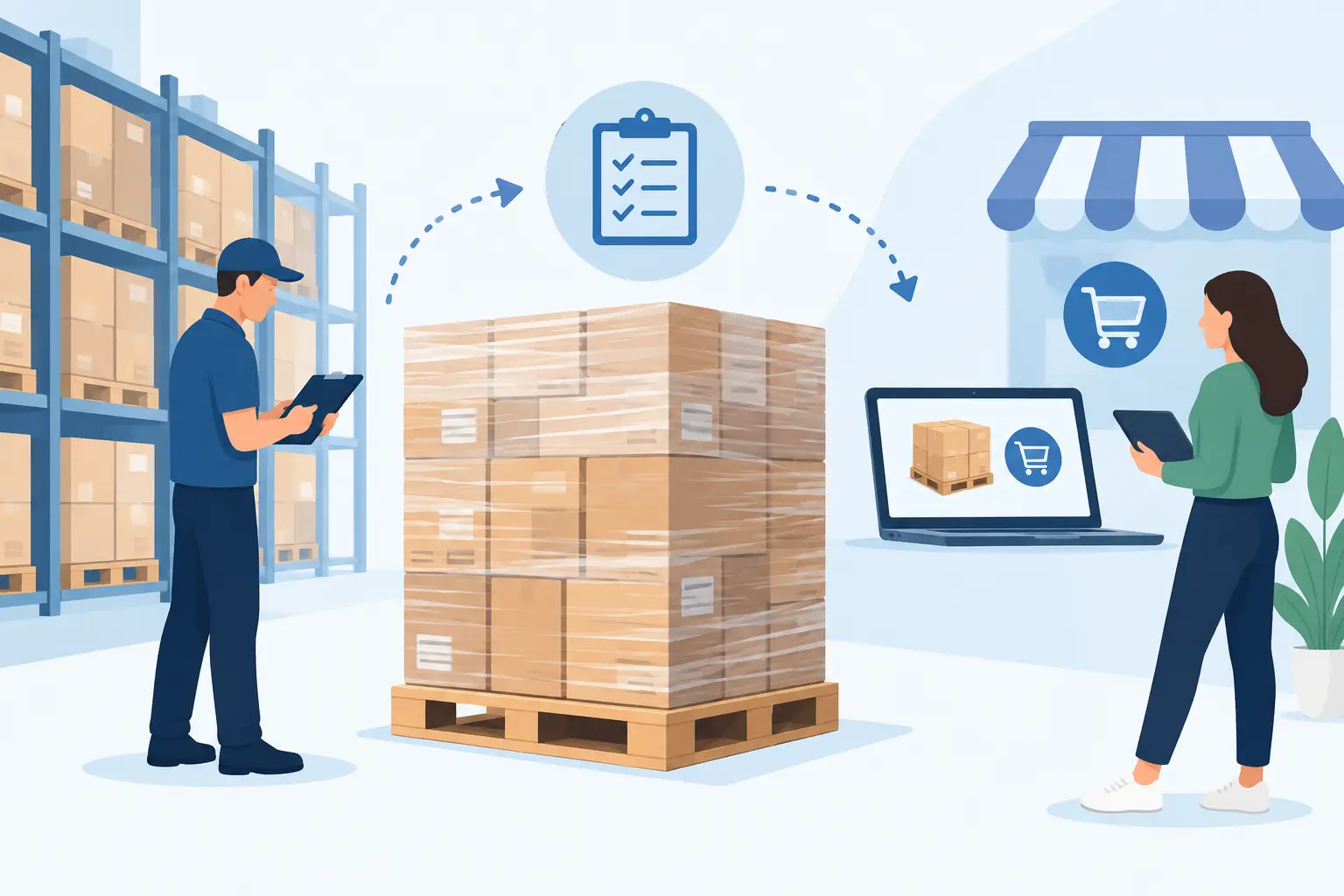
Pallet manifesting begins when inventory is sorted, identified, and recorded before it is offered for sale. Depending on the source and type of goods, the process may start with retailer-provided inventory data, then move through physical inspection and grading. The goal is to create an accurate picture of what a buyer is purchasing, not to attach a large retail-value number to an unknown pile of merchandise.
A warehouse team typically separates inventory by category, retailer source, condition grade, or all three. For example, a pallet of customer-returned electronics should not be represented the same way as a pallet of new overstock apparel. The products may be counted by SKU, UPC, model number, or a clear item description. Quantities are recorded, and the pallet is assigned a manifest tied to that specific lot.
The depth of the manifest depends on the inventory. A single-SKU pallet of new branded footwear may need only a style, size run, quantity, and condition description. A mixed general-merchandise pallet needs more detail because the buyer must understand the range of products and likely resale channels.
A properly manifested pallet should be paired with real photos of the actual inventory whenever possible. Photos help confirm scale, packaging condition, assortment, and whether the goods shown match the written details. A spreadsheet alone is useful, but a spreadsheet without visual proof leaves too much room for surprises.
What a Pallet Manifest Should Include
A useful manifest gives you enough information to evaluate the lot before you buy it. It should identify the merchandise clearly rather than relying on vague labels such as “assorted high-value goods.” In most cases, you should expect item descriptions, quantities, condition information, estimated retail values, and a total estimated retail value for the pallet.
For stronger buying decisions, look for these details:
- Product name, brand, model, SKU, UPC, or another reliable identifier
- Quantity of each item or a clearly stated case-pack count
- Condition grade, such as new, overstock, shelf pull, open box, or customer return
- Estimated retail value per unit and for the full line item
- Notes about missing accessories, packaging damage, testing status, or visible defects
- Actual pallet photos and, when relevant, dimensions or total weight
Not every liquidation pallet can provide every data point. Mixed returns may contain items that are difficult to identify until they are processed individually. That limitation is not automatically a red flag, provided it is disclosed before purchase. The problem is a seller presenting uncertain or untested goods as fully verified inventory.
Condition Grades Must Match the Manifest
Condition is where margins are made or lost. A manifest that lists a €276 vacuum does not tell you much if the item is a customer return with a damaged box, a missing charger, or an unknown operating condition. The retail price is only a reference point. Your resale value depends on condition, completeness, demand, and where you plan to sell it.
New and overstock inventory generally offers the most predictable resale path. Shelf pulls may be new but have price stickers, cosmetic packaging wear, or discontinued packaging. Open-box goods can be profitable when the contents are complete and the item can be tested. Customer returns carry more uncertainty and should be priced with a wider allowance for defects, missing components, and labor.
An honest manifest identifies those distinctions. If a pallet is sold as untested returns, treat it as untested returns when you calculate your bid or purchase price. Do not use full retail values to justify a purchase price that only works if every item is new.
The Difference Between a Manifest and a Mystery Pallet
A mystery pallet may tell you the category and a claimed retail value, but it gives you little ability to verify what you are getting. That can work for buyers who deliberately want a gamble or have a very low acquisition cost. It is not the best model for a reseller who needs predictable inventory, accurate listings, and cash flow.
Manifested inventory gives you a basis for decision-making. You can search product demand, check recent resale pricing, identify products that are restricted on a marketplace, and decide whether the lot fits your business. A local discount store may do well with mixed household goods, while an online seller may prefer identifiable branded electronics or footwear with clear model numbers.
The trade-off is straightforward: detailed, inspected inventory usually costs more than vague mixed inventory. But a higher purchase price can be the better value when it reduces dead stock, returns, testing time, and surprises. The cheapest pallet is not necessarily the most profitable pallet.
How Resellers Use a Manifest Before Buying
Start by separating estimated retail value from your realistic recovery value. Retail value is the manufacturer or major retailer price, not your guaranteed selling price. A €92 item may move quickly for €51 slowly for €32 or not at all if it is discontinued, incomplete, or oversupplied in your market.
Review the manifest line by line and flag the items that make up most of the total value. If the top five products represent 60 percent of the stated retail value, research those products first. Check current demand, likely resale price, shipping cost, marketplace restrictions, and whether buyers commonly return them. This tells you whether the pallet’s value is concentrated in products you can actually move.
Then apply condition-based discounts. For new overstock, your expected recovery might be much closer to normal resale pricing. For open-box or returned goods, reduce projected revenue further and reserve a percentage for nonworking items, missing parts, or liquidation. Your labor matters too. A pallet that requires 20 hours of testing and listing needs a larger margin than inventory you can put on the shelf the same day.
Finally, include every cost: pallet price, freight, unloading, storage, supplies, marketplace fees, payment processing, and customer returns. A detailed manifest helps you make these calculations before inventory arrives, which is exactly when the decision should be made.
Questions to Ask When a Manifest Is Not Clear
If a listing leaves key details unanswered, ask before ordering. Is the manifest specific to the exact pallet for sale or a sample from a similar load? Are the photos of the actual pallet? Have returned items been tested, and if so, what does testing include? Does the stated retail value reflect current retail pricing or older list prices? Are there known restrictions, missing parts, damaged packaging, or nonfunctional units?
The seller’s response is part of the buying decision. Clear answers signal that the inventory has been handled with care. Evasive answers, inflated values, stock photos, and broad promises of “huge profit” are reasons to slow down. No supplier can guarantee your resale results, but a transparent supplier can give you the facts needed to buy intelligently.
Buy the Data, Not Just the Pallet
A manifest is valuable because it lets you choose inventory that fits your sales model. At Euro Liquidation Hub, inspected, graded, and accurately described lots are built for buyers who want to evaluate the merchandise before committing capital, not after a truck arrives.
The best pallet for your business is rarely the one with the biggest advertised retail number. It is the one with identifiable products, realistic condition notes, usable photos, and enough margin after every cost. Read the manifest like an operator, price the risk honestly, and choose inventory you can move with confidence.