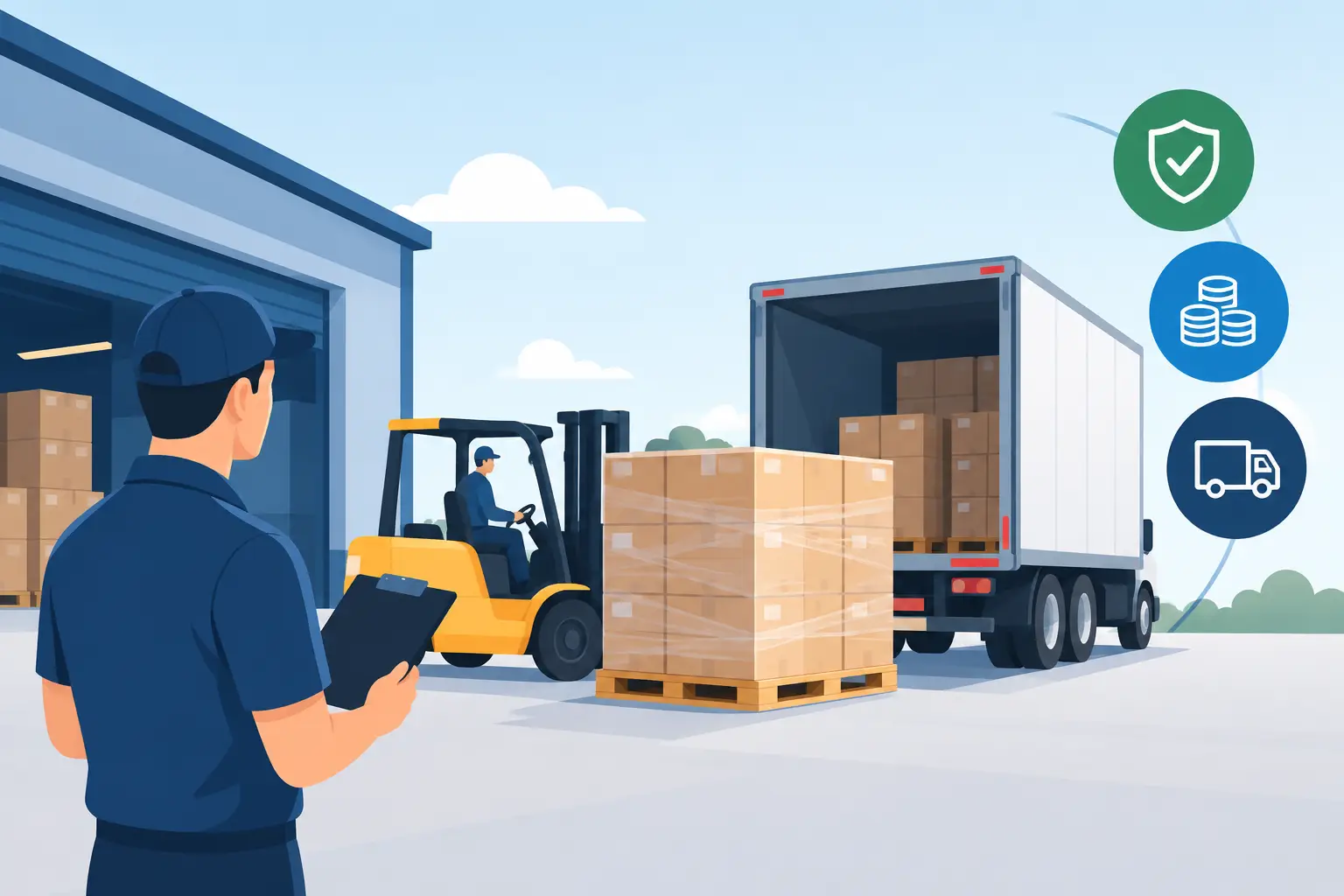
A profitable pallet can turn into an expensive mistake before you sell a single item if you treat freight as an afterthought. Wholesale pallet shipping is not like receiving a small parcel at your front door. It involves freight carriers, delivery appointments, equipment requirements, and a receiving plan that protects both your inventory and your margin.
For resellers, shipping is part of the buy decision. The pallet price may look attractive, but your true landed cost includes transportation, unloading, local handling, storage, and the time required to inspect and list the goods. Know those costs before you order, and you can buy with confidence instead of chasing a retail-value number that does not translate into profit.
What Wholesale Pallet Shipping Actually Includes
Most liquidation pallets move by less-than-truckload freight, usually called LTL. Your pallet shares trailer space with other freight moving in the same general direction. This is often the practical choice for one to several pallets because you are not paying for an entire truck.
A freight quote is based on more than distance. Carriers consider the pallet’s dimensions, weight, freight class, pickup and delivery ZIP codes, and the type of address receiving the shipment. A pallet going to a commercial warehouse with a loading dock is usually easier and less expensive to deliver than the same pallet going to a residence.
That difference matters. Residential delivery, liftgate service, limited-access locations, appointment requests, and re-delivery attempts can all add charges. These are not surprise fees when they are identified upfront. They become surprises when a buyer assumes a carrier can unload a heavy, wrapped pallet in a driveway without the right equipment.
Before placing an order, confirm the pallet count, approximate footprint, weight, and delivery requirements. Then evaluate the freight cost against the actual resale opportunity inside the load. A low pallet price does not automatically mean a low-risk purchase, especially if shipping consumes the margin.
Choose a Delivery Location That Fits the Load
The best delivery address depends on how you operate. Established stores, warehouses, and commercial spaces often have an advantage because they may have a loading dock, forklift, pallet jack, or staff available during business hours. That can simplify delivery and reduce accessorial charges.
Home-based resellers can still receive wholesale inventory, but they need to be realistic about the setup. If the location has no dock or forklift, request liftgate service when it is available. A liftgate lowers the pallet from the truck to ground level. It does not mean the driver will move inventory through a garage, up a slope, across gravel, or inside a building.
Make sure there is a clear, safe place for the truck to access and unload. Tight streets, gated communities, steep driveways, low-hanging branches, and parked vehicles can create delays or failed delivery attempts. If access is questionable, a nearby commercial receiving location or freight terminal pickup may be the smarter choice.
Terminal pickup can reduce delivery costs, but it shifts work to you. You will need a suitable vehicle or trailer, straps, and a way to load and unload safely. It is a good option for experienced buyers with the equipment, not a shortcut for someone hoping a pallet will fit in a passenger vehicle.
The Freight Details That Change Your Final Cost
When comparing liquidation opportunities, do not compare pallet prices alone. Compare landed costs. That means the product price plus freight and every known expense required to get the inventory ready for resale.
Ask whether your shipment requires residential service, a liftgate, an appointment, or special delivery instructions. Also account for storage charges if you miss the carrier’s delivery window. Freight terminals and carriers work on schedules, and holding a shipment because nobody is ready to receive it can quickly eat into your buying budget.
A practical way to evaluate a pallet is to divide your total landed cost by the number of realistically sellable items. For example, a pallet with a €460 purchase price and €230 freight cost has a €690 landed cost before labor, marketplace fees, supplies, and storage. If the manifest shows 50 items, your starting average inventory cost is €14 per unit, not €9.
That does not mean every item must sell for the same amount. Some items will produce more margin, some will need price reductions, and some may become parts, bundles, or local clearance stock. The point is to price from reality. Accurate numbers give you room to make good decisions after the pallet arrives.
Manifested Inventory Makes Shipping Worth It
Shipping a pallet is a commitment. You are paying to move physical inventory across states, so you should know what you are committing to buy. That is why manifested pallets are a better fit for resellers who want measurable risk rather than mystery-box excitement.
A useful manifest gives item-level visibility, including product descriptions, quantities, and condition information where available. Real pallet photos add another layer of confidence by showing how the inventory is packed and what condition to expect. Together, these details let you evaluate whether a category fits your sales channels before you pay freight.
A pallet of customer returns may offer strong upside, but it also requires more testing, cleaning, sorting, and condition-based pricing than new overstock. Apparel can be fast to process if sizing and brand demand are clear. Power equipment may command higher resale prices but needs more inspection space and more careful functional testing. Mixed general merchandise can spread risk across categories, but it takes longer to organize and list.
The right choice depends on your operation. Buy inventory that matches your ability to receive, process, and sell it. There is no benefit to saving on freight if the pallet then sits untouched because it does not fit your workspace or customer base.
Prepare Before the Carrier Arrives
Do not wait for the delivery call to figure out where the pallet will go. Clear a dry, secure area before the carrier arrives. Keep the pallet elevated and protected from weather if it cannot be moved indoors immediately. Water damage, crushed cartons, and missing labels make inventory harder to sell and harder to track.
Your receiving plan should cover four practical needs:
- Someone authorized to receive the shipment during the carrier’s delivery window.
- A clear unloading area with enough room for a pallet jack, liftgate, or forklift to operate safely.
- A phone ready to photograph the pallet, shrink wrap, labels, and any visible damage.
- A sorting area with bins, shelves, or tables for separating inventory by condition and sales channel.
Have a copy of the order details and manifest available when the pallet arrives. Compare the pallet count and visible labels with the shipment paperwork. If the wrap is torn, cartons are crushed, or the load appears shifted, document it before moving anything.
Inspect Freight at Delivery, Not Days Later
The delivery receipt, often called a bill of lading or proof of delivery, matters. Before signing, inspect the exterior of the shipment as carefully as the situation allows. If you see visible freight damage, write a clear note on the receipt. Terms such as “damaged shrink wrap,” “crushed cartons,” or “pallet leaning on arrival” create a record that the issue existed at delivery.
Do not sign for freight as clean and undamaged if it plainly is not. At the same time, do not refuse a shipment simply because the pallet looks like it has traveled on a truck. Normal handling marks are not necessarily a product problem. Focus on material damage, missing pallets, broken wrap, water exposure, or signs that cartons have been compromised.
Once the carrier leaves, move quickly. Photograph the pallet from all sides, carefully unwrap it, and compare the contents against the manifest. Separate items by grade and condition as you process them. New, shelf-pull, overstock, open-box, and customer-return inventory should not be priced or marketed as though they are identical.
This is where accurate grading protects your reputation. Your buyers will return when the condition of the merchandise matches your listing. They will not care that you got a bargain if an item was described as new but arrives incomplete or untested.
Build Shipping Into Your Buying Strategy
Freight becomes easier to manage when you stop treating every pallet as a one-off purchase. If a category sells consistently for you, ordering multiple compatible pallets can spread delivery costs across more units. That can improve your per-item landed cost, provided you have the cash flow, storage space, and processing capacity to handle the larger order.
However, bigger is not always better. A new reseller may make more profit from one well-manifested, category-specific pallet than from several mixed loads that demand weeks of sorting. The goal is not to fill every square foot of your space. The goal is to turn inventory into cash at a pace that supports your business.
Choose pallets with clear photos, honest condition descriptions, and manifests you can price before ordering. Then arrange delivery as deliberately as you choose the merchandise. When the truck arrives, you should be ready to receive inventory, verify it, and start building your next sale.